Britain's Gambling Loyalty Ladders: Climbing Through Points, Perks, and Personalized Offer Structures
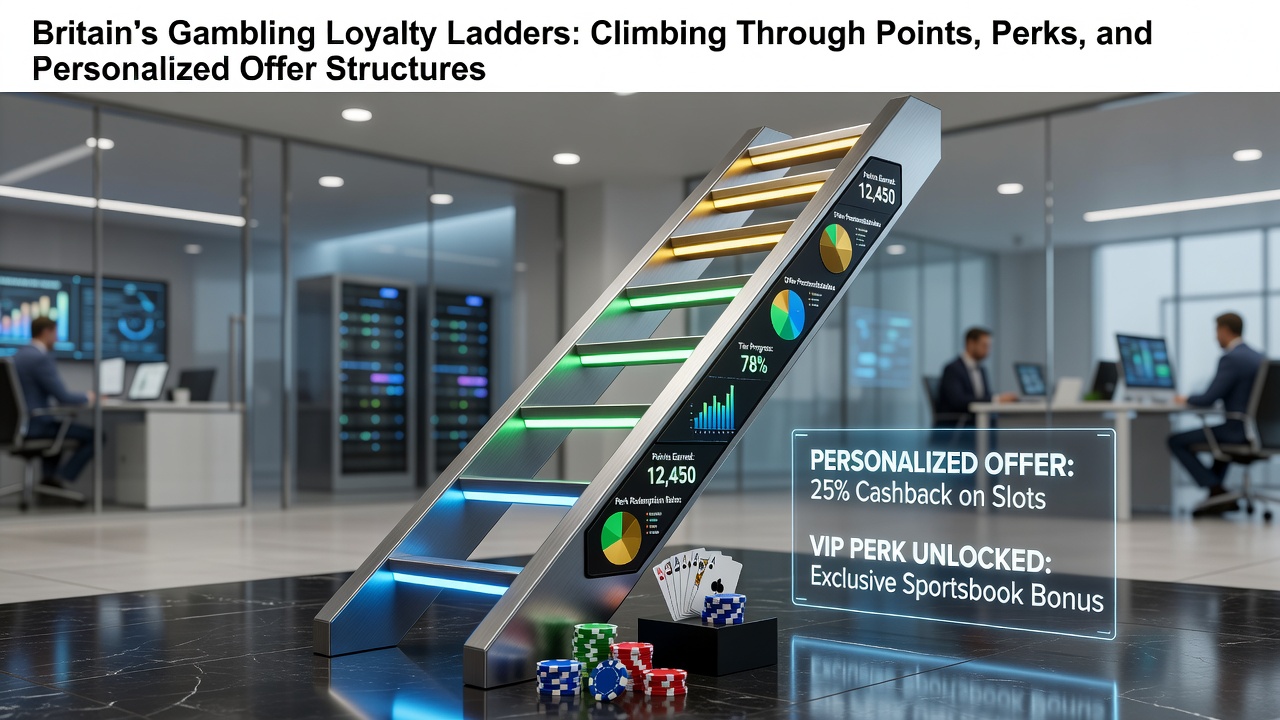 Britain's gambling operators have developed elaborate loyalty ladders that convert player activity into points, tier advancements, and tailored promotions. These systems operate across betting sites and casino platforms, where participants accumulate credits through wagers on sports markets, slot spins, and table games, then exchange those credits for benefits that scale with engagement levels. Points function as the foundation of most programs, with operators assigning values based on bet size and game type. A typical structure awards one point for every £10 staked on sports, while casino play might generate points at rates tied to theoretical loss or actual turnover. Players track progress through account dashboards that display current balances alongside requirements for the next tier, and many systems reset points on a monthly or quarterly cycle to maintain ongoing participation. Tier progression creates the ladder effect, usually spanning four to six levels from entry-level bronze or silver up to elite gold, platinum, or diamond designations. Advancement depends on cumulative points earned over set periods, with each rung unlocking additional features such as faster withdrawal processing, dedicated account managers, and enhanced bonus eligibility. Data from industry analyses shows that higher tiers often correlate with increased retention metrics, as participants receive incentives calibrated to their historical activity patterns. Perks expand at successive levels, starting with basic cashback percentages and free bet vouchers at lower stages before incorporating exclusive tournament access, birthday rewards, and merchandise at mid-tier positions. Top-tier members frequently gain invitations to events, priority support lines, and customized deposit matches that reflect their preferred betting categories. These benefits operate alongside standard promotions yet receive priority allocation during peak periods such as major football tournaments or seasonal racing festivals. Personalized offer structures rely on data analytics to segment users according to deposit frequency, game preferences, and response rates to previous communications. Operators deploy algorithms that generate targeted messages, ranging from reload bonuses timed to individual login patterns to loss-recovery credits delivered shortly after significant sessions. This approach allows platforms to adjust reward values dynamically, ensuring offers align with observed behavior rather than applying uniform templates across all accounts.
  External factors influence how these ladders evolve, including regulatory adjustments and technological updates that affect data collection capabilities. As of June 2026 several platforms introduced enhanced tracking tools that integrate mobile app usage with desktop sessions, producing more granular profiles for offer customization while maintaining compliance with data protection standards. Studies conducted by research institutions such as the Australian Institute of Criminology highlight patterns in loyalty program design across jurisdictions, noting similarities in point valuation methods and tier thresholds that appear in UK implementations. European trade bodies have documented comparable structures in reports covering multiple markets, where operators balance reward generosity against operational costs to sustain long-term player bases. Case examples illustrate the mechanics in practice. One major betting group structures its ladder so that reaching the third tier automatically enrolls participants in a monthly prize draw funded by a percentage of platform rake, while another casino network ties diamond status to a sliding scale of cashback that increases with verified monthly volume. These arrangements demonstrate how points serve dual purposes as both currency and progress markers within the same framework. Observers note that integration between loyalty ladders and live events creates additional engagement layers, where points earned during specific matches or tournaments feed directly into exclusive leaderboards. Such features combine with standard accumulation rates to produce hybrid incentives that reward both volume and timing of activity. The systems also incorporate expiration rules and qualifying conditions that govern point validity and perk redemption. Players must often meet minimum activity thresholds within defined windows to retain tier status, while unused points may convert to alternative rewards or simply lapse according to published terms. These parameters appear in operator documentation and help maintain program sustainability across fluctuating participation levels. Further refinements appear through partnerships with third-party providers that supply the backend software for points tracking and offer distribution. These collaborations enable smaller operators to deploy sophisticated ladders without building custom infrastructure, resulting in more uniform mechanics across competing platforms despite differences in branding and primary markets. Conclusion
Britain's gambling loyalty ladders continue to develop through iterative adjustments to points systems, tier benefits, and data-driven personalization. The frameworks link everyday wagering to structured advancement paths that deliver escalating rewards, supported by analytics that refine individual experiences. External research from varied regions informs ongoing refinements, while operational examples demonstrate consistent application across betting and casino environments.
External factors influence how these ladders evolve, including regulatory adjustments and technological updates that affect data collection capabilities. As of June 2026 several platforms introduced enhanced tracking tools that integrate mobile app usage with desktop sessions, producing more granular profiles for offer customization while maintaining compliance with data protection standards. Studies conducted by research institutions such as the Australian Institute of Criminology highlight patterns in loyalty program design across jurisdictions, noting similarities in point valuation methods and tier thresholds that appear in UK implementations. European trade bodies have documented comparable structures in reports covering multiple markets, where operators balance reward generosity against operational costs to sustain long-term player bases. Case examples illustrate the mechanics in practice. One major betting group structures its ladder so that reaching the third tier automatically enrolls participants in a monthly prize draw funded by a percentage of platform rake, while another casino network ties diamond status to a sliding scale of cashback that increases with verified monthly volume. These arrangements demonstrate how points serve dual purposes as both currency and progress markers within the same framework. Observers note that integration between loyalty ladders and live events creates additional engagement layers, where points earned during specific matches or tournaments feed directly into exclusive leaderboards. Such features combine with standard accumulation rates to produce hybrid incentives that reward both volume and timing of activity. The systems also incorporate expiration rules and qualifying conditions that govern point validity and perk redemption. Players must often meet minimum activity thresholds within defined windows to retain tier status, while unused points may convert to alternative rewards or simply lapse according to published terms. These parameters appear in operator documentation and help maintain program sustainability across fluctuating participation levels. Further refinements appear through partnerships with third-party providers that supply the backend software for points tracking and offer distribution. These collaborations enable smaller operators to deploy sophisticated ladders without building custom infrastructure, resulting in more uniform mechanics across competing platforms despite differences in branding and primary markets. Conclusion
Britain's gambling loyalty ladders continue to develop through iterative adjustments to points systems, tier benefits, and data-driven personalization. The frameworks link everyday wagering to structured advancement paths that deliver escalating rewards, supported by analytics that refine individual experiences. External research from varied regions informs ongoing refinements, while operational examples demonstrate consistent application across betting and casino environments.
Britain's gambling operators have developed elaborate loyalty ladders that convert player activity into points, tier advancements, and tailored promotions. These systems operate across betting sites and casino platforms, where participants accumulate credits through wagers on sports markets, slot spins, and table games, then exchange those credits for benefits that scale with engagement levels. Points function as the foundation of most programs, with operators assigning values based on bet size and game type. A typical structure awards one point for every £10 staked on sports, while casino play might generate points at rates tied to theoretical loss or actual turnover. Players track progress through account dashboards that display current balances alongside requirements for the next tier, and many systems reset points on a monthly or quarterly cycle to maintain ongoing participation. Tier progression creates the ladder effect, usually spanning four to six levels from entry-level bronze or silver up to elite gold, platinum, or diamond designations. Advancement depends on cumulative points earned over set periods, with each rung unlocking additional features such as faster withdrawal processing, dedicated account managers, and enhanced bonus eligibility. Data from industry analyses shows that higher tiers often correlate with increased retention metrics, as participants receive incentives calibrated to their historical activity patterns. Perks expand at successive levels, starting with basic cashback percentages and free bet vouchers at lower stages before incorporating exclusive tournament access, birthday rewards, and merchandise at mid-tier positions. Top-tier members frequently gain invitations to events, priority support lines, and customized deposit matches that reflect their preferred betting categories. These benefits operate alongside standard promotions yet receive priority allocation during peak periods such as major football tournaments or seasonal racing festivals. Personalized offer structures rely on data analytics to segment users according to deposit frequency, game preferences, and response rates to previous communications. Operators deploy algorithms that generate targeted messages, ranging from reload bonuses timed to individual login patterns to loss-recovery credits delivered shortly after significant sessions. This approach allows platforms to adjust reward values dynamically, ensuring offers align with observed behavior rather than applying uniform templates across all accounts.
External factors influence how these ladders evolve, including regulatory adjustments and technological updates that affect data collection capabilities. As of June 2026 several platforms introduced enhanced tracking tools that integrate mobile app usage with desktop sessions, producing more granular profiles for offer customization while maintaining compliance with data protection standards. Studies conducted by research institutions such as the Australian Institute of Criminology highlight patterns in loyalty program design across jurisdictions, noting similarities in point valuation methods and tier thresholds that appear in UK implementations. European trade bodies have documented comparable structures in reports covering multiple markets, where operators balance reward generosity against operational costs to sustain long-term player bases. Case examples illustrate the mechanics in practice. One major betting group structures its ladder so that reaching the third tier automatically enrolls participants in a monthly prize draw funded by a percentage of platform rake, while another casino network ties diamond status to a sliding scale of cashback that increases with verified monthly volume. These arrangements demonstrate how points serve dual purposes as both currency and progress markers within the same framework. Observers note that integration between loyalty ladders and live events creates additional engagement layers, where points earned during specific matches or tournaments feed directly into exclusive leaderboards. Such features combine with standard accumulation rates to produce hybrid incentives that reward both volume and timing of activity. The systems also incorporate expiration rules and qualifying conditions that govern point validity and perk redemption. Players must often meet minimum activity thresholds within defined windows to retain tier status, while unused points may convert to alternative rewards or simply lapse according to published terms. These parameters appear in operator documentation and help maintain program sustainability across fluctuating participation levels. Further refinements appear through partnerships with third-party providers that supply the backend software for points tracking and offer distribution. These collaborations enable smaller operators to deploy sophisticated ladders without building custom infrastructure, resulting in more uniform mechanics across competing platforms despite differences in branding and primary markets. Conclusion
Britain's gambling loyalty ladders continue to develop through iterative adjustments to points systems, tier benefits, and data-driven personalization. The frameworks link everyday wagering to structured advancement paths that deliver escalating rewards, supported by analytics that refine individual experiences. External research from varied regions informs ongoing refinements, while operational examples demonstrate consistent application across betting and casino environments.